
Calcium Carbonate Food Grade: Trusted Manufacturer & Global Supply Excellence
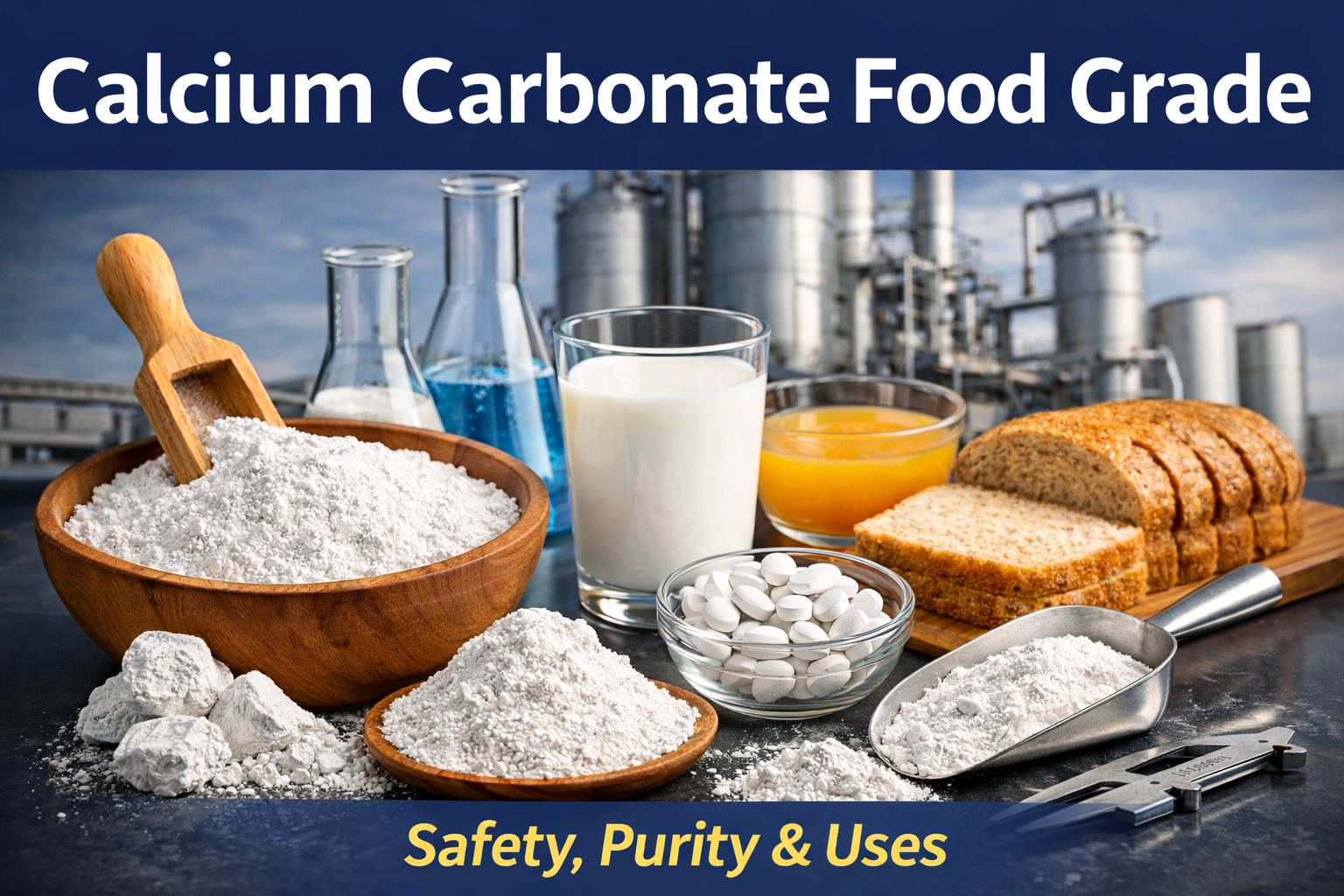
Calcium carbonate food grade is one of the most widely used mineral ingredients in the global food industry. From calcium fortification to pH control, this essential compound plays a critical role in maintaining product quality and nutritional value.
With increasing regulatory requirements and consumer awareness, manufacturers must ensure they source certified calcium carbonate food grade material from trusted suppliers. In this guide, we will explore its properties, standards, applications, certifications, and why choosing an experienced manufacturer like Vigyan Lime matters.
What is Calcium Carbonate Food Grade?
Calcium carbonate food grade is a purified form of calcium carbonate (CaCO₃) specifically processed and tested to meet food safety regulations. It is safe for human consumption and widely used in food and beverage manufacturing.
It differs from industrial-grade material because:
-
It undergoes strict purification
-
Heavy metals are controlled
-
It is tested for microbiological safety
-
It complies with international standards
In many cases, calcium carbonate fcc grade is considered the benchmark for food-grade purity.
Chemical Properties and Composition
Chemical Formula: CaCO₃
Calcium carbonate food grade has the following properties:
-
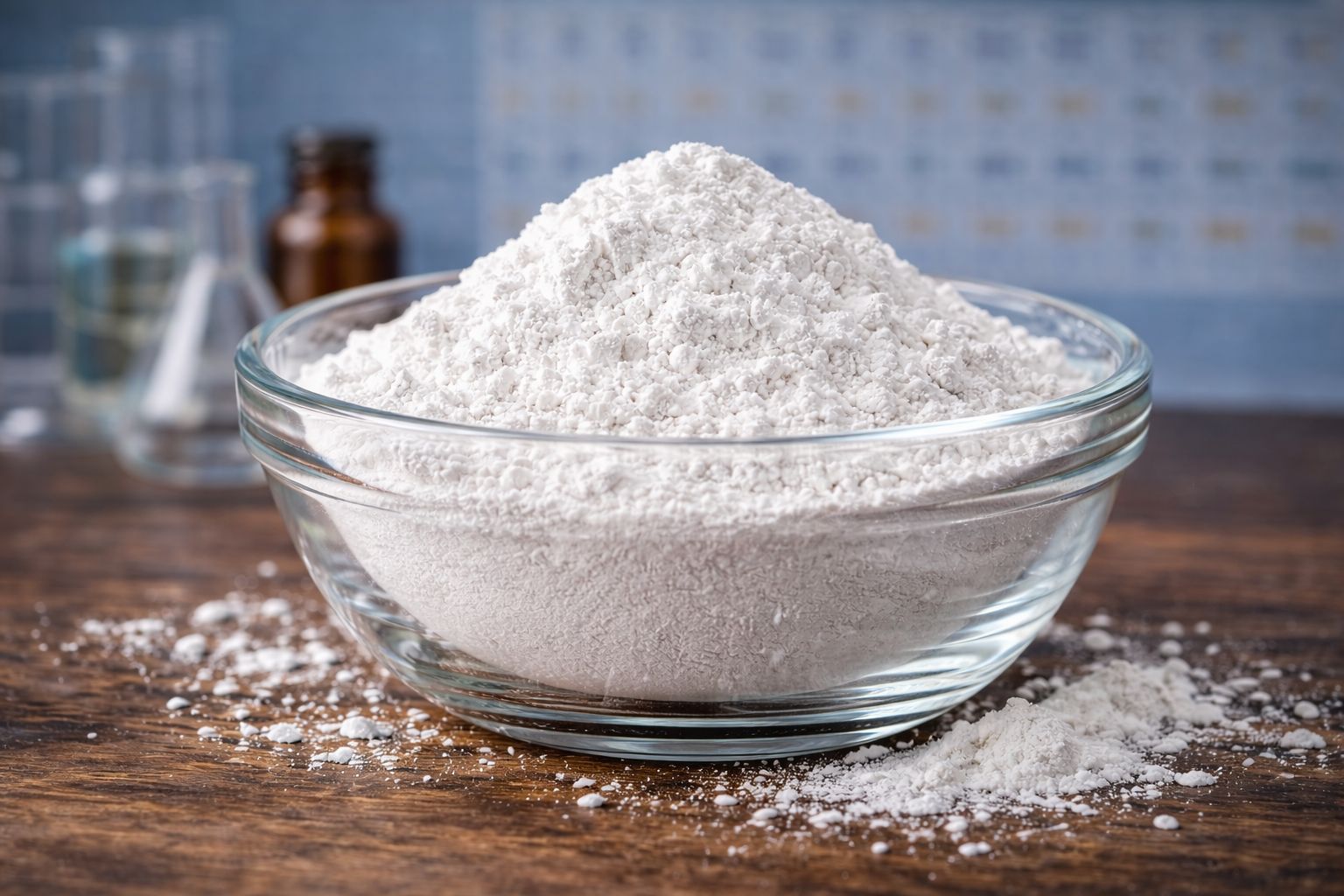
White, odorless powder
-
Neutral taste
-
Insoluble in water
-
Stable under normal storage conditions
-
Reacts with acids to release carbon dioxide
Because of its neutral flavor profile, it does not significantly alter the taste of fortified products.
Key Applications of Calcium Carbonate Food Grade
1. Nutritional Fortification
One of the most common uses of calcium carbonate food grade is calcium enrichment.
It is added to:
-
Breakfast cereals
-
Plant-based milk alternatives
-
Fruit juices
-
Bakery products
-
Nutritional supplements
Calcium is essential for strong bones and teeth, and fortification helps address dietary deficiencies.
2. Acidity Regulator & pH Control
It is used to neutralize acidity in:
-
Sauces
-
Processed foods
-
Beverages
This helps improve shelf life and product stability.
3. Anti-Caking Agent
In powdered food products, calcium carbonate prevents clumping and improves flowability.
Difference Between Food Grade and FCC Grade
Many buyers ask whether calcium carbonate food grade and calcium carbonate fcc grade are the same.
Here’s the clarification:
-
Food Grade: General classification for safe food use
-
FCC Grade: Must comply with Food Chemicals Codex standards
All FCC grade products are food grade, but not all food-grade products are FCC certified.
Manufacturing Process of Calcium Carbonate Food Grade
The production process determines the final purity and performance.
Raw Material Selection
High-purity limestone is carefully selected from reliable mineral deposits.
Micronization and Processing
The material is:
-
Crushed
-
Pulverized
-
Micronized to required particle size
Advanced equipment ensures uniform consistency.
Quality Testing
Every batch undergoes:
-
Heavy metal testing
-
Assay testing
-
Moisture testing
-
Microbial testing
Only approved batches are released for food use.
Why Choose Vigyan Lime for Calcium Carbonate Food Grade?
When sourcing calcium carbonate food grade, reliability and compliance are critical.
Vigyan Lime is a leading Indian manufacturer operating multiple production units across:
-
Jodhpur & Nagaur (Rajasthan)
-
Udaipur (Rajasthan)
-
Haldwani (Uttarakhand)
-
Sataun (Himachal Pradesh)
The company maintains internationally recognized certifications such as:
-
ISO 9001:2015
-
ISO 22000:2018
-
ISO 14001:2015
-
ISO 45001:2018
-
REACH (EU)
-
HALAL
-
KOSHER
Products are processed in compliance with:
-
USP
-
FCC
-
IP
-
BP
-
EN
-
ASTM
-
BIS
For detailed specifications and bulk inquiries, visit the official website:
👉 https://vigyanlime.com/
Partnering with experienced manufacturers ensures regulatory compliance, consistent quality, and global acceptance.
Quality Parameters to Check Before Buying
Before purchasing calcium carbonate food grade material, verify:
-
Purity percentage
-
Heavy metal limits
-
Particle size distribution
-
Moisture content
-
Certificate of Analysis (COA)
-
Compliance certifications
Trusted suppliers like Vigyan Lime provide full documentation for transparency.
Storage and Handling Guidelines
To maintain quality:
-
Store in a cool, dry place
-
Use sealed food-grade packaging
-
Avoid moisture exposure
-
Prevent contamination
Proper storage ensures long shelf life and consistent product performance.
Market Demand and Global Trends
The demand for calcium carbonate food grade is rising due to:
-
Growing health awareness
-
Expansion of fortified foods
-
Increasing vegan product market
-
Rising nutraceutical consumption
India has become a major exporter of certified calcium carbonate fcc grade and food-grade materials to Europe, the Middle East, and Asia-Pacific regions.
Frequently Asked Questions (FAQs)
1. Is calcium carbonate food grade safe?
Yes, when produced under regulated standards and consumed within recommended limits.
2. Can it be used in beverages?
Yes, it is widely used for calcium fortification in drinks.
3. What certifications should a supplier have?
ISO certifications, FCC compliance, REACH, HALAL, and KOSHER approvals.
4. Does it change product taste?
No, it has a neutral taste.
5. Is food grade the same as pharmaceutical grade?
No, pharmaceutical grade meets additional medicinal standards.
6. Where can I source certified calcium carbonate food grade in India?
You can contact established manufacturers like Vigyan Lime through their official website: https://vigyanlime.com/
Calcium carbonate food grade remains a vital ingredient in the modern food industry. Its purity, safety, and versatility make it indispensable for fortification, pH control, and product stabilization.
Choosing certified calcium carbonate fcc grade material from reliable manufacturers like Vigyan Lime ensures regulatory compliance, consistent quality, and long-term business reliability.
As the global demand for fortified and health-focused foods continues to grow, calcium carbonate food grade will remain at the forefront of food innovation and nutritional enhancement.
Hydrated Lime FCC Grade | Food Grade Calcium Hydroxide Manufacturer
Calcium Carbonate FCC Grade: Complete Guide to Food Safety, Standards & Industrial Excellence
Calcium carbonate fcc grade is one of the most important mineral ingredients used in the food, pharmaceutical, and nutraceutical industries. When it comes to safety, purity, and regulatory compliance, manufacturers prefer certified calcium carbonate food grade material that meets international standards.
In today’s competitive market, choosing the right supplier is just as important as choosing the right grade. This article explains everything you need to know — from technical specifications to applications and why trusted manufacturers like Vigyan Lime play a crucial role in quality assurance.
What is Calcium Carbonate FCC Grade?
Calcium carbonate fcc grade refers to highly purified calcium carbonate that complies with the standards set by the Food Chemicals Codex (FCC). FCC standards ensure that the product:
-
Meets strict purity levels
-
Contains controlled heavy metal limits
-
Is safe for food consumption
-
Follows regulatory guidelines
In simple terms, FCC grade means “food-safe and quality verified.”
Difference Between Calcium Carbonate FCC Grade and Industrial Grade
Many buyers get confused between food grade and industrial grade materials. Here’s the key difference:
| Parameter | FCC Grade | Industrial Grade |
|---|---|---|
| Purity | Very High | Variable |
| Heavy Metals | Strictly Controlled | May Contain Impurities |
| Food Use | Yes | No |
| Regulatory Approval | Required | Not Mandatory |
Using non-certified material in food applications can lead to serious compliance issues.
Chemical Composition and Properties
Chemical Formula: CaCO₃
Calcium carbonate food grade is:
-
White, odorless powder
-
Insoluble in water
-
Soluble in dilute acids
-
Chemically stable
-
Neutral in taste
Because of these properties, it blends easily in food formulations without altering flavor significantly.
Applications of Calcium Carbonate Food Grade
1. Nutritional Fortification
One of the most common uses of calcium carbonate fcc grade is calcium enrichment.
It is added to:
-
Breakfast cereals
-
Plant-based milk
-
Fruit juices
-
Bakery products
-
Dietary supplements
Calcium is essential for strong bones and teeth. Fortification helps prevent calcium deficiency in growing children and aging adults.
2. pH Regulation
It acts as a buffering agent in:
-
Beverages
-
Processed foods
-
Sauces
This helps maintain product stability and extend shelf life.
3. Anti-Caking Agent
In powdered products, calcium carbonate food grade prevents clumping and improves flowability.
Manufacturing Process of Calcium Carbonate FCC Grade
The quality of the final product depends heavily on manufacturing standards.
Raw Material Selection
High-purity limestone deposits are selected carefully.
Advanced Grinding & Micronization
Material is crushed and micronized to achieve precise particle size distribution.
Strict Testing & Quality Control
Each batch undergoes:
-
Heavy metal testing
-
Purity analysis
-
Moisture testing
-
Microbiological testing
Only compliant batches are approved for food use.
Why Choose Vigyan Lime for Calcium Carbonate FCC Grade?
When sourcing calcium carbonate fcc grade, working with a certified and experienced manufacturer is essential.
Vigyan Lime is a trusted Indian manufacturer with multiple production facilities across:
-
Rajasthan (Jodhpur, Nagaur, Udaipur)
-
Uttarakhand (Haldwani)
-
Himachal Pradesh (Sataun)
The company operates under internationally recognized certifications including:
-
ISO 9001:2015
-
ISO 22000:2018
-
ISO 14001:2015
-
ISO 45001:2018
-
REACH (EU)
-
HALAL
-
KOSHER
Vigyan Lime processes materials compliant with:
-
USP
-
FCC
-
IP
-
BP
-
EN
-
ASTM
-
BIS
This ensures global acceptance and consistent quality.
For detailed product specifications, certifications, and bulk supply inquiries, you can visit the official website:
👉 https://vigyanlime.com/
Quality Parameters to Check Before Buying
Before purchasing calcium carbonate food grade material, verify:
-
Assay (Purity %)
-
Heavy metal limits
-
Particle size
-
Moisture content
-
Certificate of Analysis (COA)
-
Compliance certificates
Reliable suppliers like Vigyan Lime provide full documentation to ensure transparency and regulatory compliance.
Storage and Handling Guidelines
To maintain quality:
-
Store in dry, moisture-free environment
-
Keep packaging sealed
-
Avoid exposure to acids
-
Use food-grade handling procedures
Proper storage ensures longer shelf life and consistent performance.
Global Market Demand
The demand for calcium carbonate fcc grade is increasing due to:
-
Growing health awareness
-
Expansion of fortified food products
-
Rising nutraceutical industry
-
Increasing demand for plant-based beverages
India has emerged as a major exporter of calcium carbonate food grade products, especially to Europe, the Middle East, and Southeast Asia.
Frequently Asked Questions (FAQs)
1. Is calcium carbonate fcc grade safe for daily consumption?
Yes, when used within recommended limits and manufactured under FCC standards.
2. What is the difference between FCC and USP grade?
FCC grade is for food applications, while USP grade is for pharmaceutical use.
3. Can calcium carbonate food grade be used in beverages?
Yes, it is widely used for calcium fortification.
4. Does it affect product taste?
No, it is mostly neutral in flavor.
5. What certifications should suppliers have?
ISO certifications, FCC compliance, REACH, HALAL, and KOSHER approvals.
6. Where can I source certified calcium carbonate fcc grade in India?
You can contact established manufacturers like Vigyan Lime through their official website: https://vigyanlime.com/
Calcium carbonate fcc grade plays a critical role in the food and nutraceutical industries. Its high purity, regulatory compliance, and multifunctional applications make it a preferred choice worldwide.
Choosing certified calcium carbonate food grade material ensures product safety, regulatory approval, and long-term brand trust. Partnering with experienced manufacturers like Vigyan Lime further strengthens quality assurance and global supply reliability.
As the demand for fortified and health-focused products continues to grow, calcium carbonate fcc grade will remain a key ingredient in modern food innovation.
Calcium Carbonate FCC Grade: 7 Powerful Benefits, Uses & Quality Standards Explained
Calcium carbonate fcc grade is one of the most widely used food-grade mineral compounds in the world. From fortifying cereals to stabilizing beverages, this highly purified ingredient plays a crucial role in the food and beverage industry. But what exactly makes calcium carbonate fcc grade different from other types of calcium carbonate? And why is it so important in food manufacturing?
In this comprehensive guide, we’ll explore its properties, applications, safety standards, manufacturing process, and industry regulations. Whether you’re a food manufacturer, supplier, student, or simply curious, this article will give you a clear and practical understanding.
Introduction to Calcium Carbonate FCC Grade
Calcium carbonate fcc grade is a purified form of calcium carbonate that meets the standards outlined in the Food Chemicals Codex (FCC). The FCC is a globally recognized compendium that sets purity and identity specifications for food ingredients.
This grade is specifically manufactured for food and beverage applications, ensuring safety, consistency, and regulatory compliance. Unlike industrial-grade calcium carbonate used in construction or plastics, calcium carbonate fcc grade undergoes strict testing to eliminate harmful impurities such as heavy metals.
What Does FCC Mean in Food Ingredients?
FCC stands for Food Chemicals Codex. It is a set of internationally recognized standards for food ingredients published by the United States Pharmacopeia (USP). Ingredients labeled “FCC grade” must comply with strict purity and safety requirements.
When a product is labeled calcium carbonate fcc grade, it means it meets these food-grade specifications.
Chemical Composition and Formula
The chemical formula of calcium carbonate is:
CaCO₃
It consists of:
-
Calcium (Ca)
-
Carbon (C)
-
Oxygen (O₃)
It occurs naturally in minerals such as:
-
Limestone
-
Marble
-
Chalk
The FCC version ensures these natural materials are refined to meet food-quality standards.
Physical and Chemical Properties
Understanding the physical and chemical characteristics helps manufacturers choose the right ingredient for specific applications.
Appearance and Solubility
Calcium carbonate fcc grade is:
-
White, odorless powder
-
Tasteless or slightly chalky
-
Insoluble in water
-
Soluble in dilute acids
Because it is odorless and neutral in flavor, it integrates well into food formulations without altering taste significantly.
Stability and Reactivity
This compound is chemically stable under normal storage conditions. However:
-
It reacts with acids to release carbon dioxide (CO₂)
-
It decomposes at high temperatures (above 840°C)
Its stability makes it ideal for dry mixes and long shelf-life products.
Manufacturing Process of Calcium Carbonate FCC Grade
The production process determines the purity and functionality of the final product.
Natural Source Extraction
Most calcium carbonate fcc grade originates from high-purity limestone deposits. The process includes:
-
Mining high-quality limestone
-
Crushing and grinding
-
Screening for particle size control
Purification and Quality Testing
After extraction, the material undergoes:
-
Chemical purification
-
Removal of heavy metals
-
Microbiological testing
-
Particle size analysis
-
Moisture testing
Each batch must meet FCC purity standards before distribution.
Regulatory Standards and Compliance
Compliance is not optional—it’s mandatory.
Food Chemicals Codex (FCC) Standards
The FCC defines:
-
Minimum calcium carbonate content
-
Maximum heavy metal limits
-
Acceptable pH range
-
Loss on drying limits
Meeting these ensures product safety and global trade acceptance.
FDA and Global Regulatory Approvals
In the United States, calcium carbonate is classified as Generally Recognized As Safe (GRAS) by the FDA when used according to good manufacturing practices.
It is also approved in:
-
European Union
-
Canada
-
Asia-Pacific regions
Major Applications in the Food Industry
This is where calcium carbonate fcc grade truly shines.
Nutritional Fortification
One of the most important uses is calcium enrichment.
It is commonly added to:
-
Breakfast cereals
-
Plant-based milk alternatives
-
Orange juice
-
Bakery products
-
Dietary supplements
Calcium fortification helps prevent calcium deficiency and supports bone health.
pH Control and Stabilization
Calcium carbonate fcc grade acts as:
-
Acidity regulator
-
Buffering agent
-
Neutralizer in acidic formulations
It stabilizes beverages and prevents flavor changes.
Anti-Caking Agent
In powdered foods like:
-
Spices
-
Baking mixes
-
Sugar blends
It prevents clumping and improves flowability.
Comparison: FCC Grade vs Industrial Grade
| Feature | FCC Grade | Industrial Grade |
|---|---|---|
| Purity | High (Food Standard) | Variable |
| Heavy Metals | Strictly Limited | Not Controlled for Food |
| Application | Food & Beverage | Construction, Plastics |
| Testing | Mandatory | Minimal |
Using non-FCC grade in food applications is unsafe and illegal.
Benefits of Using Calcium Carbonate FCC Grade
-
Safe for food consumption
-
Cost-effective calcium source
-
Long shelf life
-
Chemically stable
-
Neutral taste
-
Widely approved globally
-
Enhances product nutritional value
Safety Profile and Toxicology
Calcium carbonate fcc grade is considered safe when consumed within recommended limits. Excessive intake may cause mild digestive discomfort, but it is generally non-toxic.
It has low bioavailability compared to some other calcium salts but remains one of the most economical options.
Storage and Handling Guidelines
To maintain quality:
-
Store in a cool, dry place
-
Avoid moisture exposure
-
Keep sealed in food-grade packaging
-
Prevent contamination
Proper storage ensures stability and prevents clumping.
Market Demand and Industry Trends
Global demand for calcium carbonate fcc grade continues to rise due to:
-
Growing fortified food market
-
Increasing health awareness
-
Expansion of plant-based beverages
-
Aging populations requiring calcium supplementation
The ingredient remains a backbone of food fortification strategies worldwide.
Frequently Asked Questions (FAQs)
1. Is calcium carbonate fcc grade safe for daily consumption?
Yes, when used within regulated limits, it is considered safe and approved by global food authorities.
2. What is the difference between FCC grade and pharmaceutical grade?
FCC grade is intended for food use, while pharmaceutical grade meets stricter medicinal standards.
3. Can calcium carbonate fcc grade be used in beverages?
Yes, it is commonly used in fortified juices and plant-based milk.
4. Does it affect taste?
It is mostly neutral in taste when used properly.
5. How should it be stored?
Store in airtight containers away from moisture.
6. Is it vegan-friendly?
Yes, when sourced from mineral limestone, it is vegan-compatible.
Calcium carbonate fcc grade is an essential food-grade mineral ingredient that delivers safety, affordability, and nutritional value. From fortifying cereals to stabilizing beverages, its versatility makes it indispensable in modern food manufacturing.
By meeting strict FCC standards and global regulatory approvals, it ensures both consumer safety and product consistency. As the demand for fortified and health-focused foods continues to grow, calcium carbonate fcc grade will remain a cornerstone of food innovation.
Why Choose Vigyan Lime for Calcium Carbonate FCC Grade?
When sourcing calcium carbonate fcc grade, choosing a trusted and certified manufacturer is critical. Vigyan Lime Company stands among India’s leading producers of high-quality mineral products, delivering purity, compliance, and global standards.
With advanced manufacturing infrastructure and strict quality control systems, Vigyan Lime ensures that every batch meets international specifications and regulatory requirements.
Manufacturing Units
Vigyan Lime operates strategically located manufacturing facilities across India:
-
Jodhpur & Nagaur (Rajasthan)
-
Udaipur (Rajasthan)
-
Haldwani (Uttarakhand)
-
Sataun (Himachal Pradesh)
These units are equipped with modern processing technologies, precision grinding systems, and strict laboratory testing protocols to maintain FCC-grade purity standards.
Global Certifications & Quality Assurance
Quality is not just a claim—it is certified.
Vigyan Lime is accredited with internationally recognized certifications, ensuring product safety, environmental responsibility, and operational excellence:
ISO Certifications
-
ISO 9001:2015 (Quality Management System)
-
ISO 14001:2015 (Environmental Management System)
-
ISO 15378:2017 (Primary Packaging Materials for Medicinal Products)
-
ISO 22716:2007 (Cosmetic GMP)
-
ISO 22000:2018 (Food Safety Management System)
-
ISO 45001:2018 (Occupational Health & Safety)
International Compliance Certifications
-
REACH (EU Compliance)
-
RoHS
-
HALAL
-
KOSHER
These certifications reflect Vigyan Lime’s commitment to supplying safe and globally accepted calcium carbonate fcc grade.
Processing Standards & Regulatory Compliance
Vigyan Lime processes products compliant with major international pharmacopeia and quality standards:
-
USP (United States Pharmacopeia)
-
FCC (Food Chemicals Codex)
-
IP (Indian Pharmacopeia)
-
BP (British Pharmacopeia)
-
EN Standards
-
ACS
-
ASTM
-
BIS
This makes the company a reliable supplier for food, pharmaceutical, cosmetic, and industrial applications.
Corporate Office & Contact Information
Head Office (H.O):
G-37, Race Course, Dehradun, Uttarakhand – 248001, India
📧 Email: info@vigyanlime.com
📞 +91-95685-01110
📞 +91-95688-01110
📞 +91-98370-55678
For bulk inquiries, export orders, or technical specifications of calcium carbonate fcc grade, customers can directly connect with the sales and technical team.
Hydrated Lime FCC Grade | Food Grade Calcium Hydroxide Manufacturer
[contact-form-7 id=”03bca0c” title=”Untitled”]
Calcium Carbonate Powder for PVC Pipes
Calcium Carbonate powder is one of the most important raw materials used in PVC pipe manufacturing. It works as a functional filler that not only reduces production cost but also improves strength, rigidity, surface finish, and processing efficiency of PVC pipes.
With decades of industrial expertise, Vigyan Lime supplies high-purity calcium carbonate grades suitable for PVC, food, pharma, toothpaste, and specialty industries, making it a trusted name across India and export markets.
This article explains how calcium carbonate works in PVC pipes, recommended grades, technical benefits, and also connects you to relevant in-depth resources for complete product understanding.
What is Calcium Carbonate Powder?
Calcium Carbonate (CaCO₃) is a naturally occurring mineral extracted from high-grade limestone and marble. After controlled grinding and micronization, it is converted into fine powder suitable for industrial applications.
Different industries require different grades:
-
PVC Grade – for pipes, fittings, profiles
-
FCC / Food Grade – for food & pharma
-
Toothpaste Grade – for oral care
-
High Brightness Grade – for premium formulations
For food & pharma-grade standards, read:
High-Purity Food Grade Calcium Carbonate (FCC Grade)
https://calciumcarbonate.co/food-grade-calcium-carbonate-fcc/
Why Calcium Carbonate is Used in PVC Pipes
In PVC pipes, calcium carbonate acts as a functional mineral filler, not just a cheap extender.
Key Functions:
-
Reduces PVC resin consumption
-
Enhances mechanical strength
-
Improves extrusion stability
-
Provides smooth surface finish
-
Improves dimensional accuracy
For a focused overview of PVC-grade material, see:
Calcium Carbonate for PVC Industry: Enhancing Strength and Cost-Efficiency
https://calciumcarbonate.co/calcium-carbonate-pvc-grade/

Key Benefits of Calcium Carbonate in PVC Pipe Manufacturing
1. Cost Optimization
Replacing part of PVC resin with calcium carbonate significantly lowers raw material cost while maintaining pipe quality.
2. Improved Strength & Rigidity
Correct particle size improves ring stiffness, hardness, and load-bearing capacity, crucial for underground and pressure pipes.
3. Better Surface Finish
Fine micronized calcium carbonate ensures smooth inner walls, improving water flow and reducing friction loss.
4. Enhanced Processing Performance
It improves:
-
Melt flow
-
Extrusion speed
-
Thermal stability
resulting in lower rejection rates.
Recommended Grades & Technical Specifications for PVC Pipes
Particle Size
-
2–5 microns → Pressure pipes & premium UPVC
-
5–10 microns → Drainage & agricultural pipes
Purity
-
CaCO₃ Content: 97% – 99%
-
Moisture: < 0.3%
-
Brightness: > 95%
For brightness control and quality insight, read:
Calcium Carbonate: Achieving 99% Brightness
https://calciumcarbonate.co/calcium-carbonate-achieving-99-brightness/
Coated vs Uncoated Calcium Carbonate for PVC Pipes
| Parameter | Coated Grade | Uncoated Grade |
|---|---|---|
| Dispersion | Excellent | Good |
| Extrusion Speed | High | Moderate |
| Pipe Finish | Very smooth | Standard |
| Cost | Slightly higher | Lower |
| Best Use | Pressure & premium pipes | Drainage & agriculture |
Stearic-acid-coated calcium carbonate is recommended for high-speed extrusion lines.
Applications of Calcium Carbonate in PVC Industry
Calcium carbonate powder is widely used in:
-
UPVC Pipes
-
CPVC Pipes
-
Agricultural PVC Pipes
-
Drainage & Sewer Pipes
-
Electrical Conduit Pipes
-
PVC Pipe Fittings
Typical PVC Pipe Compound Formulation (Example)
-
PVC Resin: 100 parts
-
Calcium Carbonate Powder: 20–80 parts
-
Stabilizer: 3–5 parts
-
Lubricants & Processing Aids: As required
(Formulation varies as per IS / ASTM standards)
Quality Parameters to Check Before Buying Calcium Carbonate
Before finalizing a supplier, ensure:
-
Consistent particle size distribution
-
High whiteness & purity
-
Low moisture content
-
Stable bulk density
-
Reliable long-term supply
For manufacturer credibility & food-grade compliance, explore:
Calcium Carbonate (Food Grade) Manufacturer from Jodhpur
https://calciumcarbonate.co/food-grade-calcium-carbonate-jodhpur/
Cross-Industry Expertise of Calcium Carbonate
Calcium carbonate is not limited to PVC alone. The same mineral is used in:
Food & Pharma Industry
Calcium Carbonate FCC Grade | Food & Pharma Use
https://calciumcarbonate.co/calcium-carbonate-fcc-grade/
Toothpaste & Oral Care
Calcium Carbonate in Toothpaste: Beyond the White Smile
https://calciumcarbonate.co/calcium-carbonate-for-toothpaste-industry/
Food-Grade Calcium Hydroxide
Food Grade Calcium Hydroxide Manufacturer
https://calciumcarbonate.co/food-grade-calcium-hydroxide-manufacturer/
This wide application base proves process consistency, purity control, and technical expertise of the manufacturer.
Storage & Handling Guidelines
-
Store in a dry, covered area
-
Use moisture-proof packaging
-
Avoid direct water contact
-
Follow FIFO inventory system
Environmental & Safety Advantages
-
Non-toxic & eco-friendly
-
Safe for drinking water pipes
-
Reduces plastic usage
-
Fully recyclable mineral filler
Conclusion
Calcium carbonate powder is a backbone raw material for PVC pipe manufacturing. Selecting the right grade, particle size, and purity ensures:
-
Lower production cost
-
Better pipe strength
-
Smooth extrusion
-
Longer service life
With multi-industry expertise in PVC, food, pharma, toothpaste, and lime products, Vigyan Lime delivers consistent, high-performance calcium carbonate trusted by manufacturers across India.
What is the use of calcium carbonate in paint?
In the modern paint and coating industry, Calcium Carbonate (CaCO_3) is no longer just a “filler” used to add weight. It has evolved into a high-performance functional additive. From providing the perfect snow-white finish to reducing the overall production cost, it is the most essential mineral in a paint chemist’s toolkit.
At Vigyan Lime, with our 77 years of manufacturing legacy, we produce high-purity Calcium Carbonate that helps brands achieve that elusive 99% brightness.1
5 Key Functions of Calcium Carbonate in Paint
1. Extending Titanium Dioxide (TiO_2)
Titanium Dioxide is the most expensive raw material in paint. Calcium Carbonate acts as a “spacer” for 2 TiO_2 particles.3 By preventing these particles from clustering, it ensures that light reflects off the surface more efficiently.
-
The Benefit: You can replace up to 10-20% of expensive TiO_2 with our high-brightness CaCO_3 without losing any “hiding power.”
2. Improving Opacity and Hiding Power
Opacity is the ability of paint to cover the previous color on a wall. High-quality Calcium Carbonate increases the “Dry Hiding” effect. As the paint film dries, the mineral particles create a dense structure that blocks light, ensuring a flawless finish in fewer coats.
3. Precision Gloss & Sheen Control
The texture of your paint—whether it’s a “Matte” finish or a “High-Gloss” sheen—depends on the particle size of the Calcium Carbonate used.
-
Fine Grades (1100 Mesh): Used for premium, silky-smooth emulsions.
-
Coarser Grades (400-600 Mesh): Used for matte finishes and industrial primers to scatter light and reduce reflections.
4. Enhancing Durability (Scrub Resistance)
A house is a long-term investment, and the paint should be too. Calcium Carbonate provides the mechanical “backbone” to the paint film. It increases Scrub Resistance, meaning the paint won’t flake or fade even after multiple washes with soap and water.4
5. Weather Resistance and Stability
Calcium Carbonate is chemically inert and weather-resistant. It protects the paint from the harsh effects of UV rays and temperature changes, preventing the paint from “chalking” (turning into white powder on the surface) over time.
Technical Specifications (Standard Paint Grade)
| Feature | Vigyan Lime Quality | Why it Matters |
| Whiteness/Brightness | 98.5% – 99% | Ensures a pure white base for all shades. |
| Oil Absorption | 16 – 20 g/100g | Lowers the requirement for expensive resins. |
| Purity (CaCO_3) | 98.5% Min | Long-lasting chemical stability in the can. |
| Contamination | Zero Black Particles | Guaranteed spotless, clean finish. |
Frequently Asked Questions (F&Q)
Q1: Does using Calcium Carbonate affect the color of my paint?
Ans: Not if you use high-purity grades. Vigyan Lime mineral is naturally ultra-white, ensuring that your pastel and vibrant shades remain “true-to-color” without any yellowish tint.
Q2: Is it suitable for water-based emulsions?
Ans: Yes, it is widely used in both water-based emulsions and solvent-based (oil) paints due to its excellent dispersibility.
Q3: How does it help in cost reduction?
Ans: By acting as a TiO_2 extender and requiring less resin (due to low oil absorption), it significantly lowers the “Cost Per Liter” for paint manufacturers.
- High-Purity Food Grade Calcium Carbonate (FCC Grade): 75 Years of Excellence by Vigyan Lime
- Calcium Carbonate FCC Grade | Food & Pharma Use
- Calcium Carbonate (Food Grade) Manufacturer from Jodhpur: The Vigyan Lime Excellence
- Calcium Carbonate FCC Grade | Food & Pharma Use
- Calcium Carbonate in Toothpaste: Beyond the White Smile
- Calcium Carbonate: Achieving 99% Brightness
- Calcium Carbonate for PVC Industry: Enhancing Strength and Cost-Efficiency
- Calcium Hydroxide (Food Grade): The Purity of Slaked Lime by Vigyan Lime
Calcium Carbonate for Paints & Coatings: Achieve 99% Brightness & Superior Opacity
In the world of decorative and industrial coatings, “Whiteness” and “Durability” are the two pillars of success. However, with the rising costs of Titanium Dioxide (), paint manufacturers are constantly searching for a solution that maintains premium quality while protecting profit margins.
At Vigyan Lime, we provide that solution. Backed by 75 years of mastery, our specialized Paint Grade Calcium Carbonate () is more than just a filler—it is a performance-driven functional additive designed to elevate your formulation.
1. The Perfect Titanium Dioxide () Extender
is the most expensive ingredient in your paint. Our ultra-fine Calcium Carbonate acts as a “spacer” for particles. By preventing these particles from clustering together, our mineral ensures maximum light scattering.
-
The Result: You can reduce consumption by 5% to 15% without losing hiding power or opacity.
2. 99% Brightness for a “True-Color” Base
A paint’s shade is only as good as its base. Using lower-quality fillers often introduces a yellowish or grayish undertone, forcing you to use more pigment to compensate.
-
Vigyan Lime Purity: Sourced from the premium mines of Jodhpur and Uttarakhand, our mineral is naturally snow-white.
-
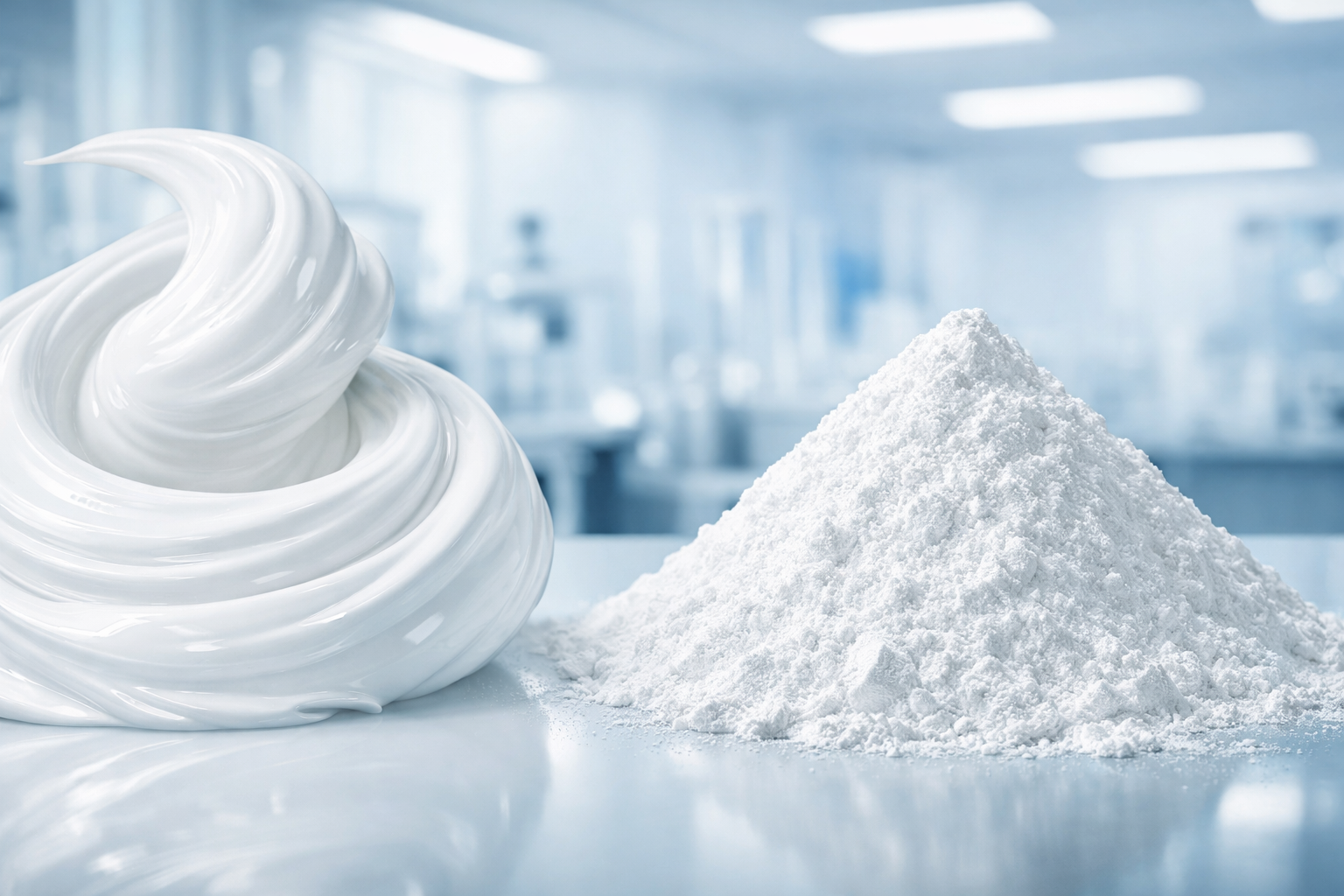
Our “Zero-Contamination” processing removes iron and silica, delivering a clean 99% brightness that makes every color—from pastel to deep shades—pop with vibrancy.
3. Enhanced Scrub Resistance & Film Integrity
Durability is what builds a brand’s reputation. Our micronized Calcium Carbonate provides the mechanical “backbone” for the paint film.
-
Smooth Finish: Available in 800 to 1100 Mesh, our particles ensure a silky-smooth surface.
-
Washability: It enhances the scrub resistance of emulsions, allowing the walls to be cleaned repeatedly without the paint flaking or “chalking.”
Technical Specifications (Paint & Coating Grade)
Frequently Asked Questions (F&Q)
Q1: How does Vigyan Lime ensure batch-to-batch consistency? Ans: With over seven decades of experience and in-house testing laboratories, every batch undergoes rigorous checks for whiteness, particle size distribution, and purity. We ensure that your production line never faces a variation issue.
Q2: Is this grade suitable for both Interior and Exterior paints? Ans: Absolutely. Our mineral is chemically inert and weather-resistant. For exterior coatings, it provides excellent UV resistance and prevents the paint from cracking under extreme temperature changes.
Q3: Can I use this for high-gloss emulsions? Ans: Yes. For high-gloss finishes, we recommend our 1100 Mesh (Top-Cut) grade. Its uniform particle distribution ensures that light reflects evenly off the surface, maintaining a high-sheen finish.
Q4: Why should we switch to Vigyan Lime? Ans: We don’t just supply minerals; we provide a 75-year legacy of trust. Our strategic locations in Jodhpur and Uttarakhand ensure the fastest delivery timelines across India and for global exports.
- High-Purity Food Grade Calcium Carbonate (FCC Grade): 75 Years of Excellence by Vigyan Lime
- Calcium Carbonate FCC Grade | Food & Pharma Use
- Calcium Carbonate (Food Grade) Manufacturer from Jodhpur: The Vigyan Lime Excellence
- Calcium Carbonate FCC Grade | Food & Pharma Use
- Calcium Carbonate in Toothpaste: Beyond the White Smile
- Calcium Carbonate: Achieving 99% Brightness
- Calcium Carbonate for PVC Industry: Enhancing Strength and Cost-Efficiency
- Calcium Hydroxide (Food Grade): The Purity of Slaked Lime by Vigyan Lime
Calcium Hydroxide (Food Grade): The Purity of Slaked Lime by Vigyan Lime
In the food industry, precision and safety are paramount. Calcium Hydroxide, commonly known as Slaked Lime or Hydrated Lime, is a versatile inorganic base essential for everything from traditional food preparation to modern nutritional fortification.
At Vigyan Lime, we manufacture a superior Food Grade Calcium Hydroxide (1$Ca(OH)_2$) that is a free-flowing, super-fine, and ultra-white powder, meticulously processed to meet global safety standards like FSSAI, USP, and ISO.
Technical Excellence & Specifications
Our Food Grade Slaked Lime is processed using ultra-modern methodology to ensure it is free from grits, allergens, and toxic contaminants.
-
High Purity: Minimum 95% to 98% $Ca(OH)_2$ content.
-
Ultra-Low Heavy Metals: Lead (Pb) < 2 ppm and Arsenic (As) < 1 ppm, ensuring it is safe for direct human consumption.
-
Fine Texture: Typically passes through a 200 mesh, ensuring a consistent smooth texture for food processing.
-
Chemical Profile: Molecular Weight of 74.09 g/mol with a characteristic alkaline taste and a pH level of 12.4.
Versatile Applications in the Food Industry
Vigyan Lime’s Calcium Hydroxide is a vital additive used across various sectors:
-
Acidity Regulator: Effectively balances pH levels in beverages and processed foods.5
-
Calcium Fortification: Adds essential calcium to fruit juices, infant formula, and health supplements.
-
Nixtamalization: Traditionally used in processing corn (maize) to enhance nutritional value and flavor.
-
Baking Substitute: Often used as a safe substitute for baking soda in specific traditional recipes.
-
Pickling Agent: Helps maintain the firmness and crunch of preserved vegetables.
Why Vigyan Lime Stands Out?
With over 75 years of mastery and a strategic presence in India’s premier mineral belts like Jodhpur and Uttarakhand, we offer:
-
Good Manufacturing Practices (GMP): Our products are non-toxic and free from non-kosher ingredients.
-
Secure Packaging: Available in 25 kg/50 kg HDPE bags with inner liners to prevent moisture absorption.
-
Global Reach: We are a trusted manufacturer, exporter, and wholesaler serving both domestic and international markets with a supply ability of 1000 Kg per day.
Frequently Asked Questions (F&Q)
Q1: What is the shelf life of Food Grade Calcium Hydroxide?
Ans: When stored in a cool, dry place in its original tightly sealed HDPE bag, our product has a shelf life of up to 24 months.
Q2: Is Vigyan Lime Calcium Hydroxide safe for infant food?
Ans: Yes. Because we strictly control heavy metals (Lead < 2 ppm), our food-grade lime meets the safety requirements for sensitive applications like food fortification.
Q3: How is it different from industrial-grade Hydrated Lime?
Ans: Food Grade lime undergoes much more rigorous refining. It has higher purity (min 95%) and significantly lower levels of heavy metals and insoluble grits compared to industrial grades.
Q4: What are the main uses beyond the food industry?
Ans: While this is a Food Grade product, the same high purity makes it excellent for Pharmaceutical APIs, Cosmetics, and High-end Water Treatment where purity is non-negotiable.
- High-Purity Food Grade Calcium Carbonate (FCC Grade): 75 Years of Excellence by Vigyan Lime
- Calcium Carbonate FCC Grade | Food & Pharma Use
- Calcium Carbonate (Food Grade) Manufacturer from Jodhpur: The Vigyan Lime Excellence
- Calcium Carbonate FCC Grade | Food & Pharma Use
- Calcium Carbonate in Toothpaste: Beyond the White Smile
- Calcium Carbonate: Achieving 99% Brightness
- Calcium Carbonate for PVC Industry: Enhancing Strength and Cost-Efficiency
- Calcium Hydroxide (Food Grade): The Purity of Slaked Lime by Vigyan Lime
Calcium Carbonate for PVC Industry: Enhancing Strength and Cost-Efficiency
The PVC industry thrives on a delicate balance between durability and production cost. Whether you are manufacturing rigid PVC pipes, flexible cables, or window profiles, the choice of Calcium Carbonate determines the physical properties of the end product.
With 75 years of mastery, Vigyan Lime provides high-purity, micronized CaCO_3 that acts as a backbone for the polymer industry.2
1. Why Particle Size (Mesh) Matters in PVC?
In PVC manufacturing, inconsistent particle size can lead to “Cracking” or “Weak Spots.”
-
Fine Micronization: We offer up to 1100 Mesh (10-15 Microns). Finer particles ensure a smoother surface finish and better integration with the PVC resin.3
-
Uniformity: Our Jodhpur and Uttarakhand units use advanced air classifiers to ensure that every bag has the same particle distribution, preventing batch-to-batch variation in your production.
2. Coated (Activated) vs. Uncoated Grade

Depending on your application, we provide two types of PVC grades:
-
Uncoated Grade: Ideal for standard applications where cost-efficiency is the primary goal. It offers excellent whiteness and bulk.
-
Coated (Activated) Grade: Our premium grade is treated with Stearic Acid. This coating creates a “hydrophobic” layer, allowing the mineral to mix perfectly with the PVC resin.
-
Benefits: Lowers torque in the extruder, increases output speed, and significantly improves the Impact Strength and Elongation at Break.
-
3. Key Benefits for PVC Manufacturers
-
Whiteness & Opacity: High brightness (up to 98%) reduces the need for expensive pigments like Titanium Dioxide (TiO_2).
-
Thermal Stability: Our high-purity mineral helps in maintaining the thermal stability of the PVC compound during high-temperature extrusion.
-
Low Abrasivity: Being naturally soft (Mohs hardness 3), Vigyan Lime’s CaCO_3 ensures minimal wear on your expensive extruder screws and barrels.
Technical Specifications (PVC Grade)
| Parameter | Specification | Industry Benefit |
| Purity ($CaCO_3$) | 98.5% Min | Stronger polymer bonding |
| Whiteness | 96% – 98% | Superior finish & color depth |
| Oil Absorption | 18 – 22 g/100g | Optimal resin consumption |
| Specific Gravity | 2.7 | Ideal density for PVC compounds |
Frequently Asked Questions (F&Q)
Q1: How does Vigyan Lime help in reducing Titanium Dioxide (TiO_2) consumption?
Ans: Due to our naturally high whiteness and specialized micronization, our PVC grade provides excellent opacity. By increasing the loading of our high-brightness CaCO_3, manufacturers can often reduce TiO_2 usage by 5-10%.
Q2: Is your PVC grade suitable for high-pressure pipes?
Ans: Yes. For high-pressure applications, we recommend our Coated/Activated Grade. It provides the necessary reinforcement and impact resistance required to meet ISI and international pipe standards.
Q3: Does the mineral contain silica or sand?
Ans: No. Our “Zero-Contamination Strategy” ensures that our PVC grade is free from silica or black particles, protecting your machinery from abrasion.
- High-Purity Food Grade Calcium Carbonate (FCC Grade): 75 Years of Excellence by Vigyan Lime
- Calcium Carbonate FCC Grade | Food & Pharma Use
- Calcium Carbonate (Food Grade) Manufacturer from Jodhpur: The Vigyan Lime Excellence
- Calcium Carbonate FCC Grade | Food & Pharma Use
- Calcium Carbonate in Toothpaste: Beyond the White Smile
- Calcium Carbonate: Achieving 99% Brightness
- Calcium Carbonate for PVC Industry: Enhancing Strength and Cost-Efficiency
- Calcium Hydroxide (Food Grade): The Purity of Slaked Lime by Vigyan Lime
Calcium Carbonate: Achieving 99% Brightness
In the paint industry, brightness isn’t just a visual trait—it’s a technical requirement. The ability of a paint to cover a surface (Opacity) and reflect light (Reflectance) depends heavily on the quality of the mineral fillers used.
At Vigyan Lime, we produce high-purity Paint Grade Calcium Carbonate that helps manufacturers achieve up to 99% brightness, ensuring premium finish and cost-efficiency.
How 99% Brightness Transforms Paint Quality

Most ordinary fillers have a yellowish or grayish tint due to impurities like iron or silica. Vigyan Lime’s minerals, sourced from the premier deposits of Jodhpur and the Himalayas, are naturally white.
-
TiO2 Replacement: Due to our high refractive index and 99% brightness, our CaCO_3 can partially replace expensive Titanium Dioxide ($TiO_2$), significantly reducing the raw material cost.
-
Weather Resistance: Our high-purity mineral ensures that the paint doesn’t yellow or chalk over time when exposed to sunlight.
-
Vibrant Color Reproduction: A 99% white base ensures that when you add pigments, the colors come out sharp and exactly as intended.
Technical Edge: Why Micron Size Matters in Coatings
It’s not just about the color; it’s about the Mesh Size. Vigyan Lime offers customized sizes up to 1100 Mesh (10 Microns).
-
High Gloss & Smoothness: Fine particles (10-15 microns) fill the gaps between larger particles, creating a smoother film and a higher gloss finish.
-
Scrub Resistance: Precision-sized particles improve the mechanical strength of the paint film, making it more durable and washable (Scrub Resistant).
-
Anti-Corrosive Properties: In industrial coatings, our low-moisture 1$CaCO_3$ acts as a barrier against corrosion.2
Why Vigyan Lime is the Industry Leader?
With 75 years of mastery and 5 strategic units (Jodhpur, Nagaur, Udaipur, Sataun, Haldwani), we offer:
-
NIL Black Particles: Ensuring a flawless finish in high-end gloss paints.
-
Low Oil Absorption: Helps in maintaining the desired viscosity and reducing resin consumption.
-
Reliable & Stable Supplies: Large-scale manufacturing capacity to support massive paint production cycles.
Frequently Asked Questions (F&Q)
Q1: Can Vigyan Lime Calcium Carbonate be used in Exterior Emulsions?
Ans: Yes. Our high-purity mineral is chemically stable and weather-resistant, making it ideal for both interior and exterior emulsions as well as distempers.
Q2: How does 1100 Mesh help in reducing costs?
Ans: 1100 Mesh ($10 \text{ Microns}$) provides better “Packing Density.” It fills the voids between pigments more effectively, which increases the hiding power (opacity) of the paint, allowing you to use less expensive binders and pigments.3
Q3: Is your paint-grade mineral compatible with water-based systems?
Ans: Absolutely. Our $CaCO_3$ is processed to ensure easy dispersibility in both water-based emulsions and solvent-based coatings.
Q4: Do you provide “NIL” black particle guarantee?
Ans: Yes, our Jodhpur and Uttarakhand units use advanced “Zero-Contamination” technology to ensure that the final powder is free from any dark specks or silica.
- High-Purity Food Grade Calcium Carbonate (FCC Grade): 75 Years of Excellence by Vigyan Lime
- Calcium Carbonate FCC Grade | Food & Pharma Use
- Calcium Carbonate (Food Grade) Manufacturer from Jodhpur: The Vigyan Lime Excellence
- Calcium Carbonate FCC Grade | Food & Pharma Use
- Calcium Carbonate in Toothpaste: Beyond the White Smile